
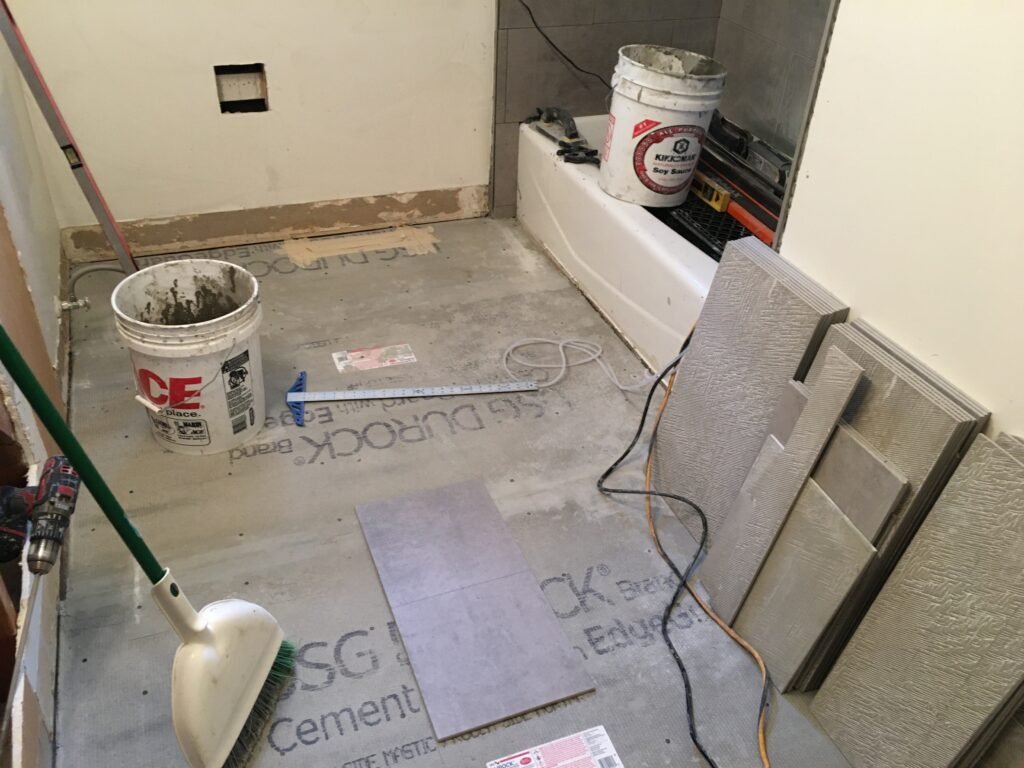
This was a multi-million-dollar Oakland Hills home, probably built in the 1950s. Building materials were better then, but the house had settled, and there wasn’t a right angle, a flat wall, or a plumb surface in the bathroom.
The easy part
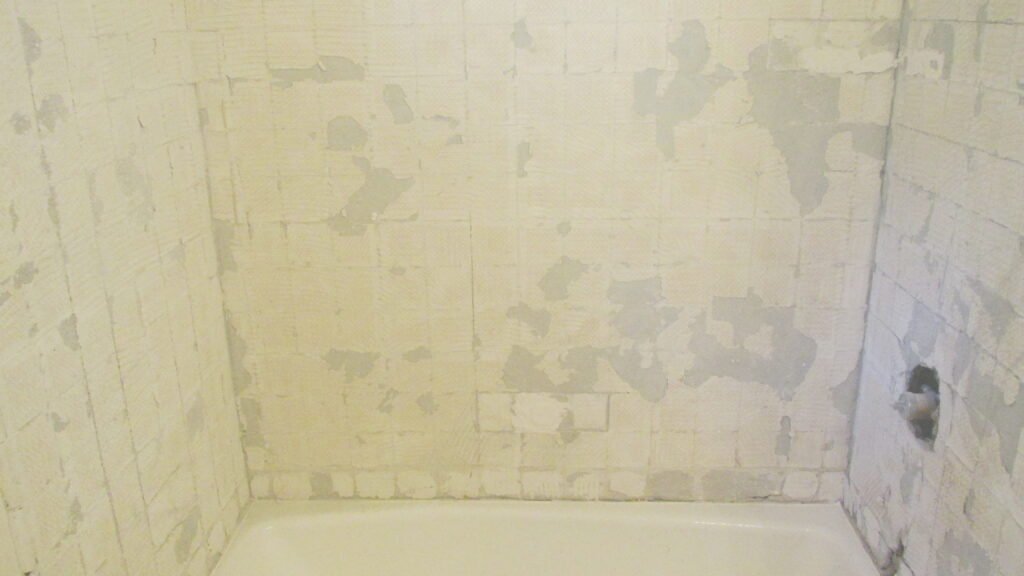
Demolition went quickly. The old tile came off the walls without much fight. Behind it was not cement backer board, but a floated mortar bed: a thick layer of deck mud and fat mud, the way showers were built for decades before backer board came along. Floated walls are solid and long-lived. They also carry every lean and wave the house has picked up since.
Why it was underbid
Two things made this job far harder than it looked.
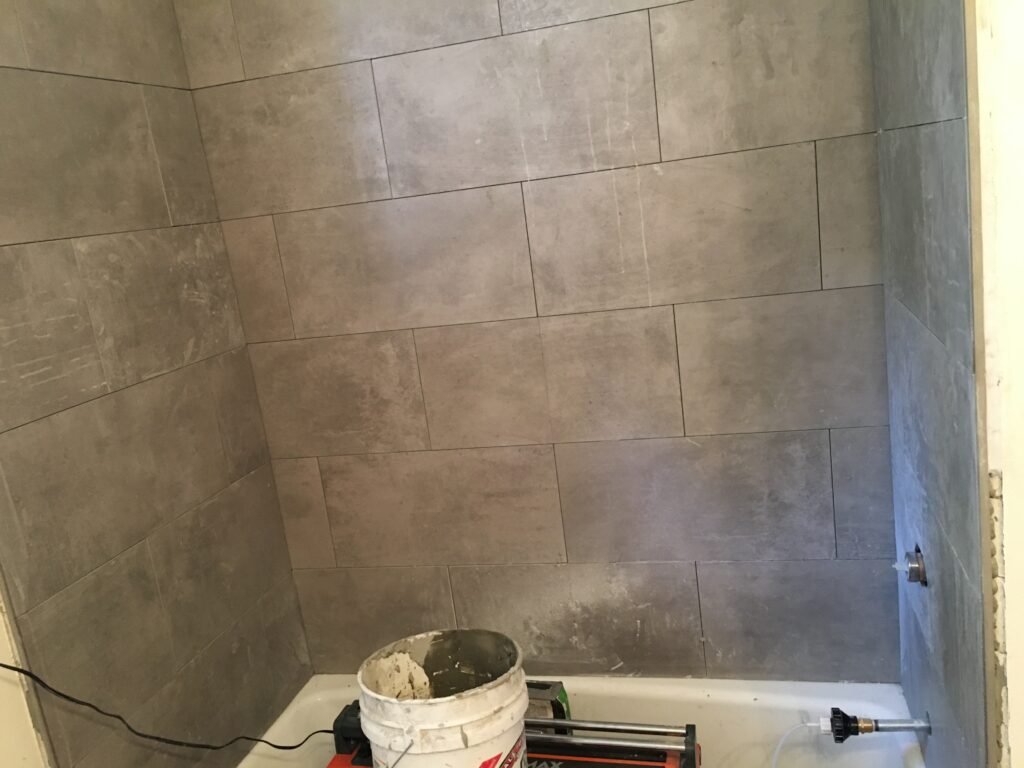
First, the walls. Tile has to be built “right” on its outer surface, flat, plumb, and square, no matter what’s behind it. Every bit of lean and bow in the old mortar bed had to be made up in new material.
Second, the grout line. The tile was set with a 1/16″ joint. The tolerance, or room for error, shrinks with the grout line. With a 1/2″ joint, a tile can drift to 3/8″ or 5/8″ (about 25% of the joint) and no one will notice. With a 1/16″ joint, the tolerance is about 1/64″, maybe 1/32″ if the people looking are generous, not professionals, or not looking closely.
Between those two factors, we seriously underbid this job.
Five bags of concrete and a lot of mortar
Truing up the walls took about five 50-pound bags of concrete, plus a great deal of mortar and fat mud, to bring everything plumb and level. We chose not to use a self-leveling compound. Instead, thinset went on with a notched trowel, tile by tile, each one adjusted as it went up. It was a 3-D puzzle, and the hardest job we’ve had to bring to a professional finish. It dragged on and on.
The problem at the edges
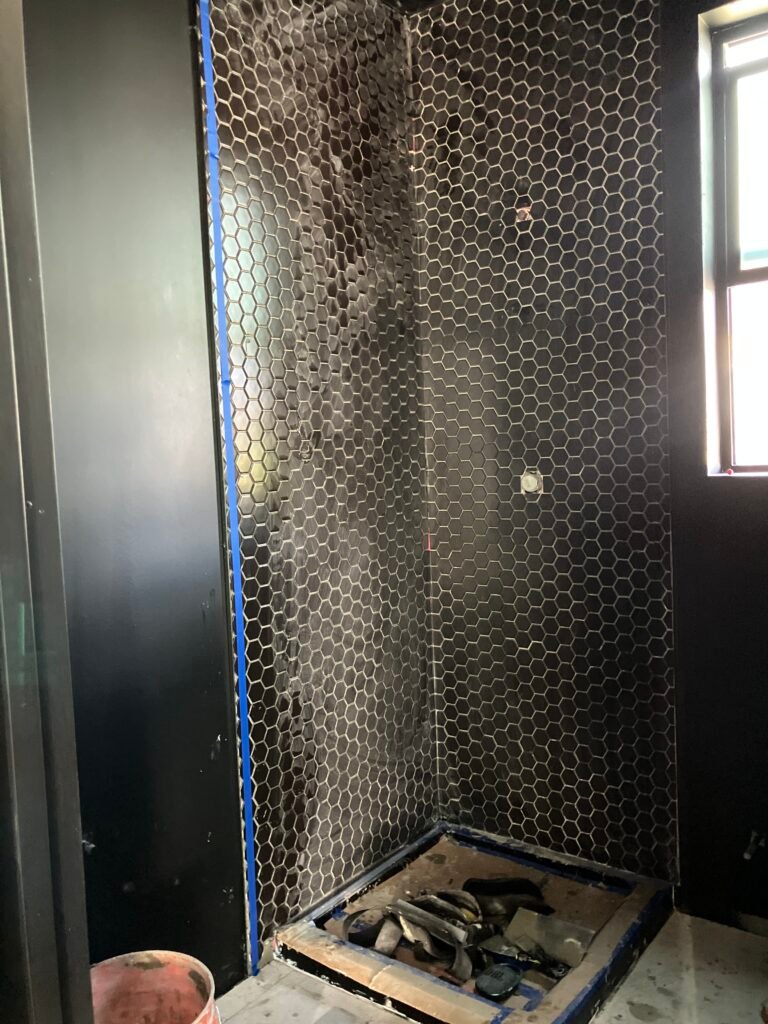
Making the walls plumb pulled the face of the shower surround out about an inch and a half at the top and sides. The owners chose not to use a crown or cap trim, so there was nothing to cover that step at the edges, and it had to be backfilled and finished by hand.
What I’d do differently
Looking back, I’d have installed another layer of backer over the old mortar bed, shimmed true, and accepted a slightly smaller shower surround, instead of floating the walls out to plumb. It would have been faster, used a fraction of the material, and avoided the build-out at the edges. There’s a certain feel to a perfectly planed tile surround, and in an old house it’s almost impossible without floating new surfaces. Sometimes the smarter move is to make the surface new rather than make the old one true.
Planning a bath remodel in an older home? See what we install, or send photos for an estimate.



Related jobs
More jobs like this
Oakland Hills · 2026
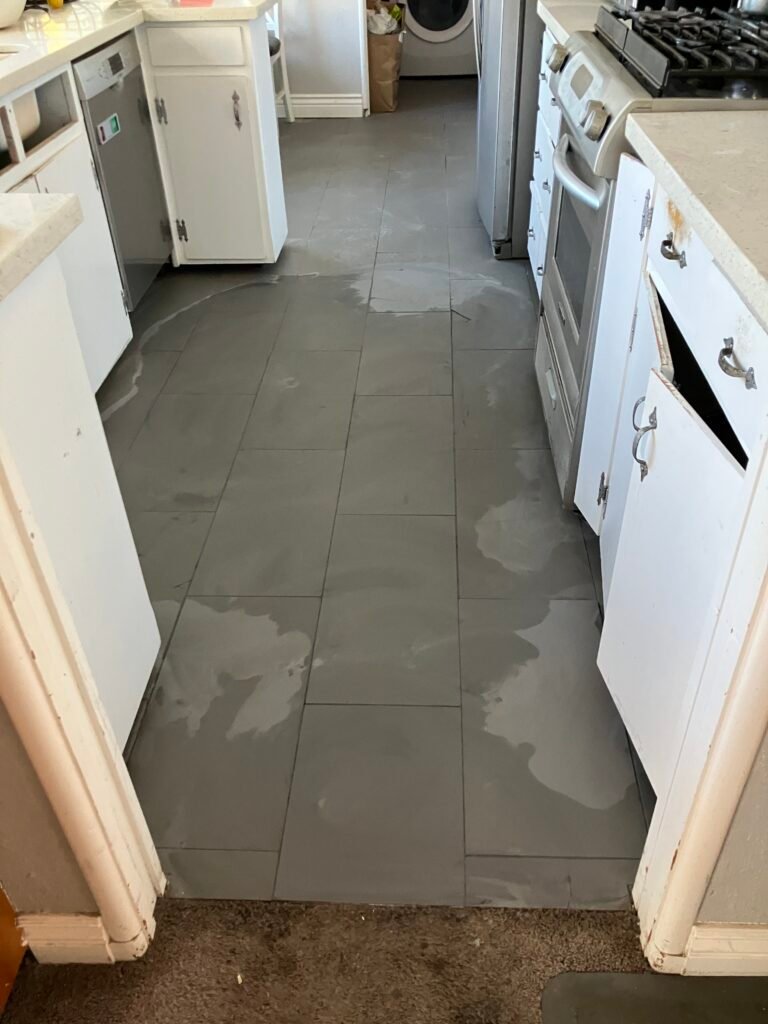
Cracked Kitchen Tile Repair in the Oakland Hills
Oakland Hills · 2026
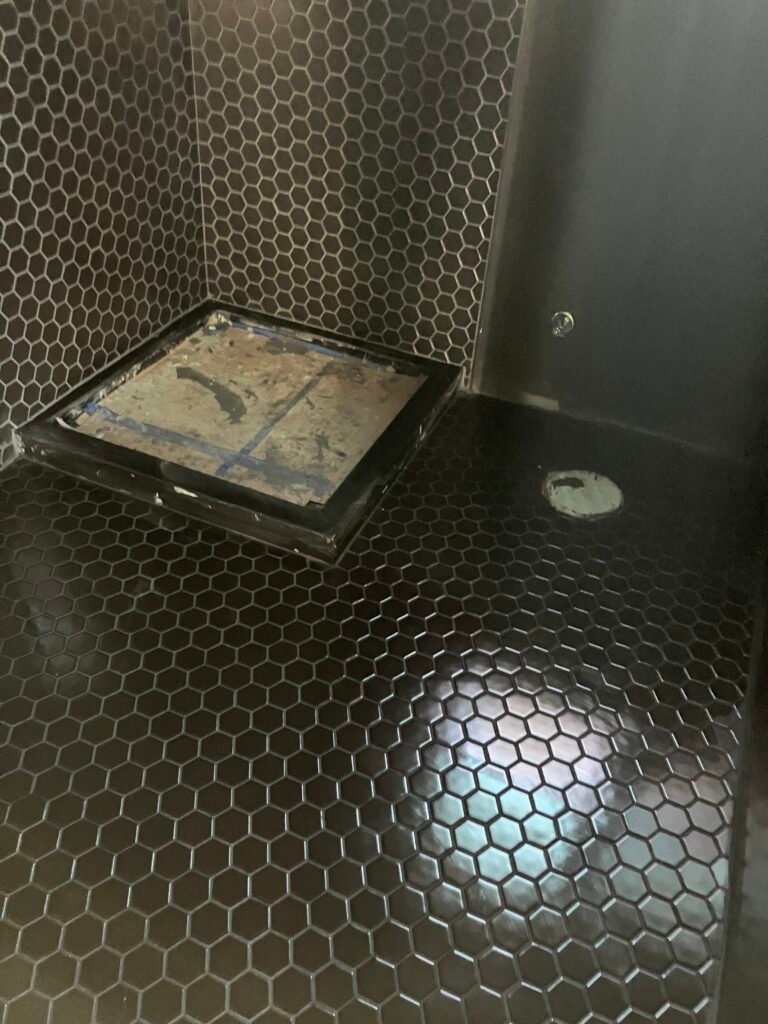
Hexagonal Mosaic Bathroom Floor in the Oakland Hills
Oakland Hills · 2026
Hexagonal Mosaic Shower Surround, Oakland Hills