
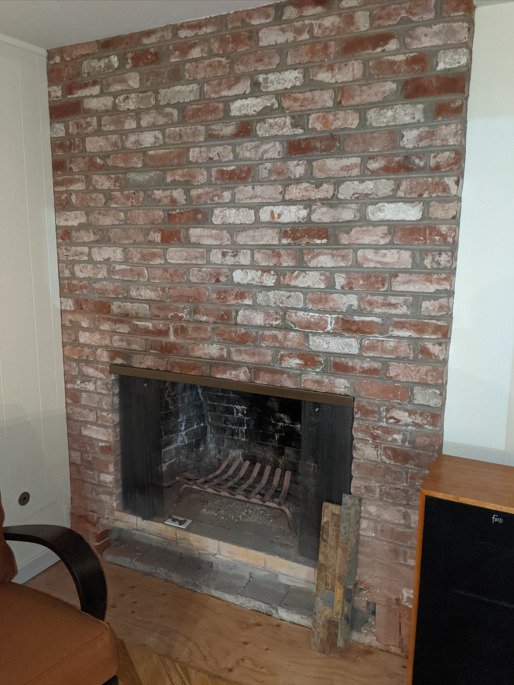
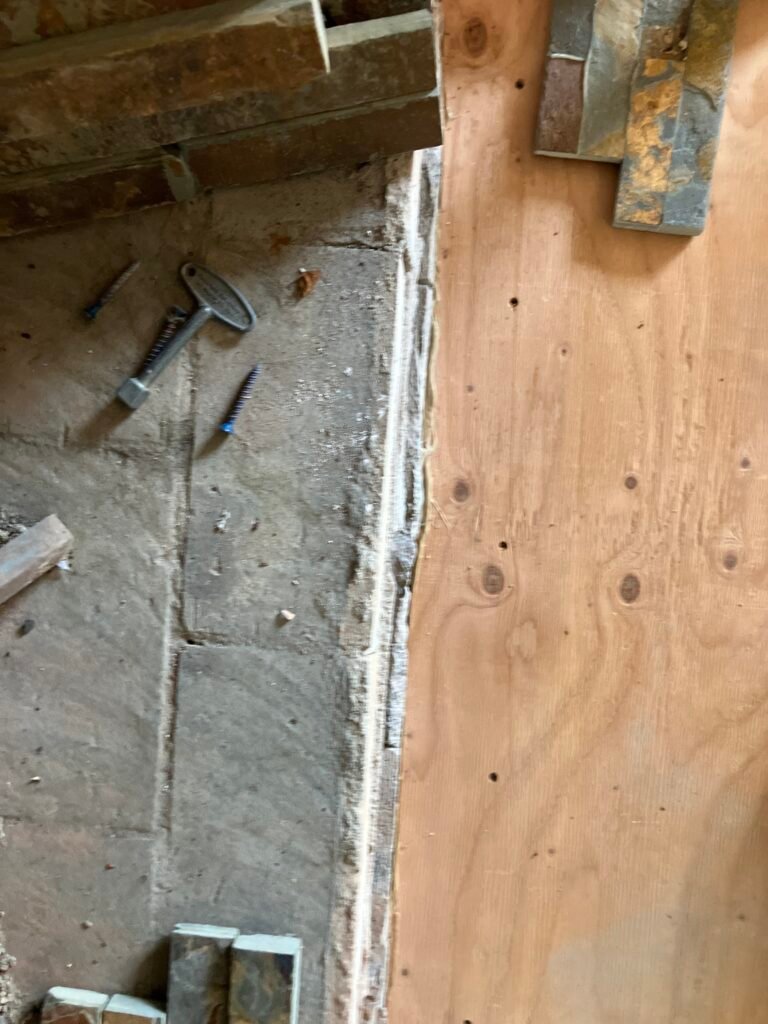
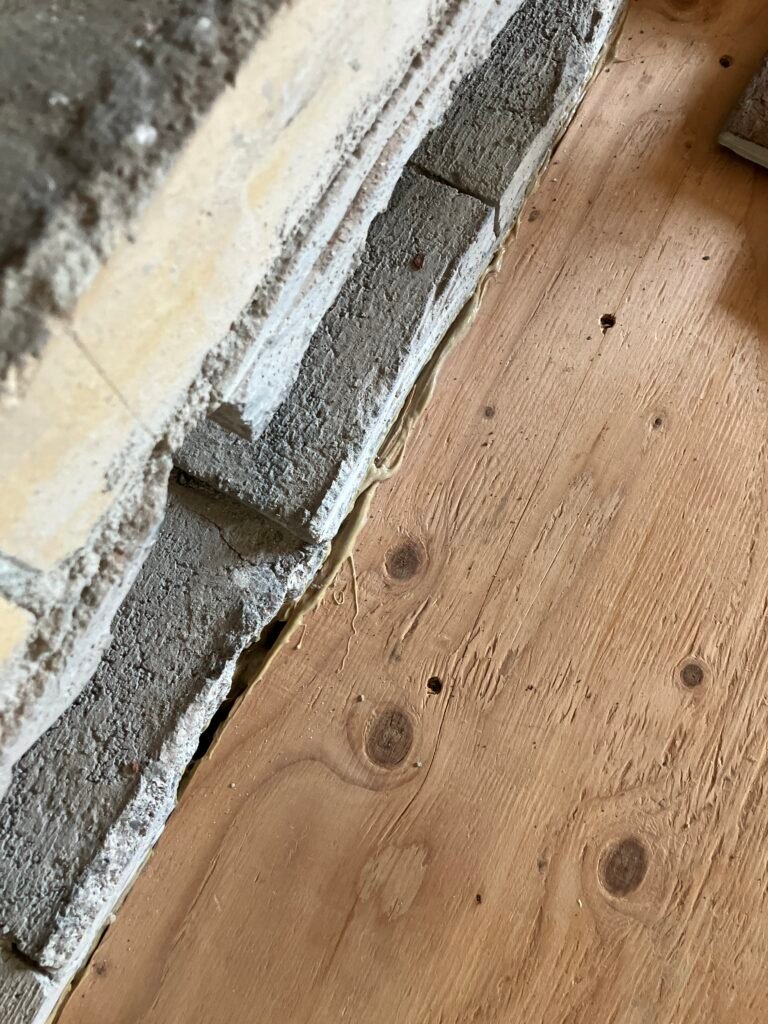
This remodel used pre-sized stone veneer to cover a fireplace that looked dated. Recladding, or resurfacing, means setting new stone directly over the existing surround instead of tearing the old fireplace out. It’s faster and far less messy than demolition, and it can transform the focal point of a room.
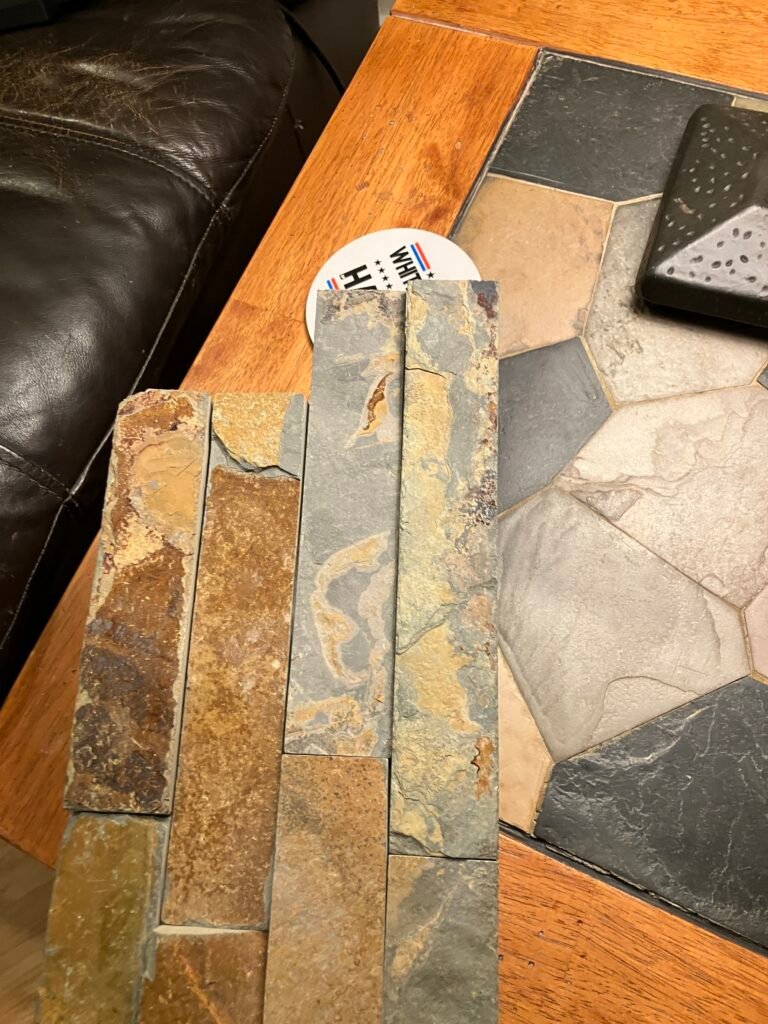
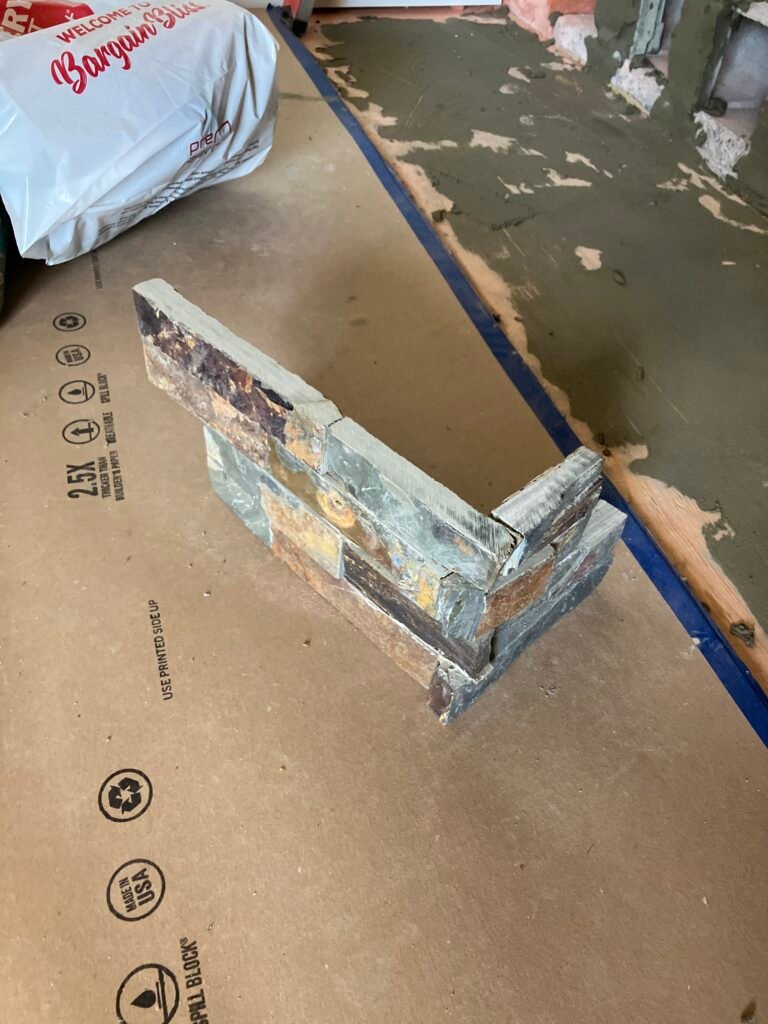
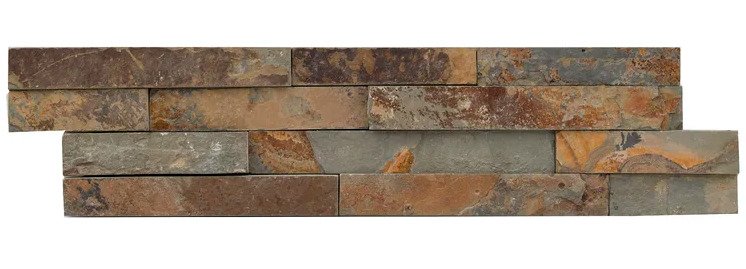
The stone appeared to be a kind of slate, and it was very soft. Pieces kept chipping and cracking as we cut and handled them, so every cut had to be made slowly and carefully, and every piece handled gently. The veneer also wasn’t manufactured to close tolerances. Pieces that were supposed to be the same size often weren’t, which meant sorting, test-fitting, and trimming as we went.
There was no grout between the stones. Dry-stacked veneer like this fits together like a puzzle, with each piece set tight against its neighbors so the joints nearly disappear. That’s what gives it a natural stone-wall look, and also why it’s unforgiving. With no grout line to absorb small differences, a piece that’s slightly off shows. Laying it out takes patience: fitting pieces dry, swapping them around, and shaping edges until the pattern looks natural and the seams stay tight across the whole face.
The trickiest part was the span over the fireplace opening. On the sides, every piece rests on the wall and the stones below it. Over the opening, the stone has nothing underneath while the mortar cures, and stone veneer is heavy. So we installed a board across the opening to support the veneer from below until the mortar hardened. Once it had set, the board came out, leaving a clean, straight bottom edge over the firebox. It’s the same challenge we faced on the Pleasanton fireplace: the line over the opening frames the fire, and it’s the first place the eye goes.
The result is a fireplace that looks entirely new, with the texture and depth of natural stone and none of the disruption of a full demolition.



Related jobs
More jobs like this
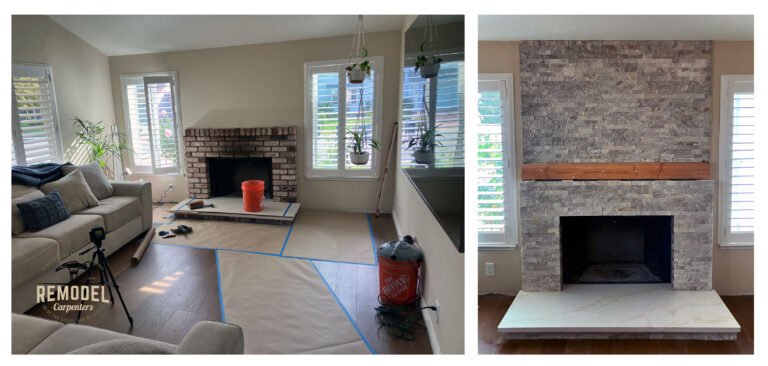
Pleasanton · 2025
Broken Marble Fireplace Surround in Pleasanton
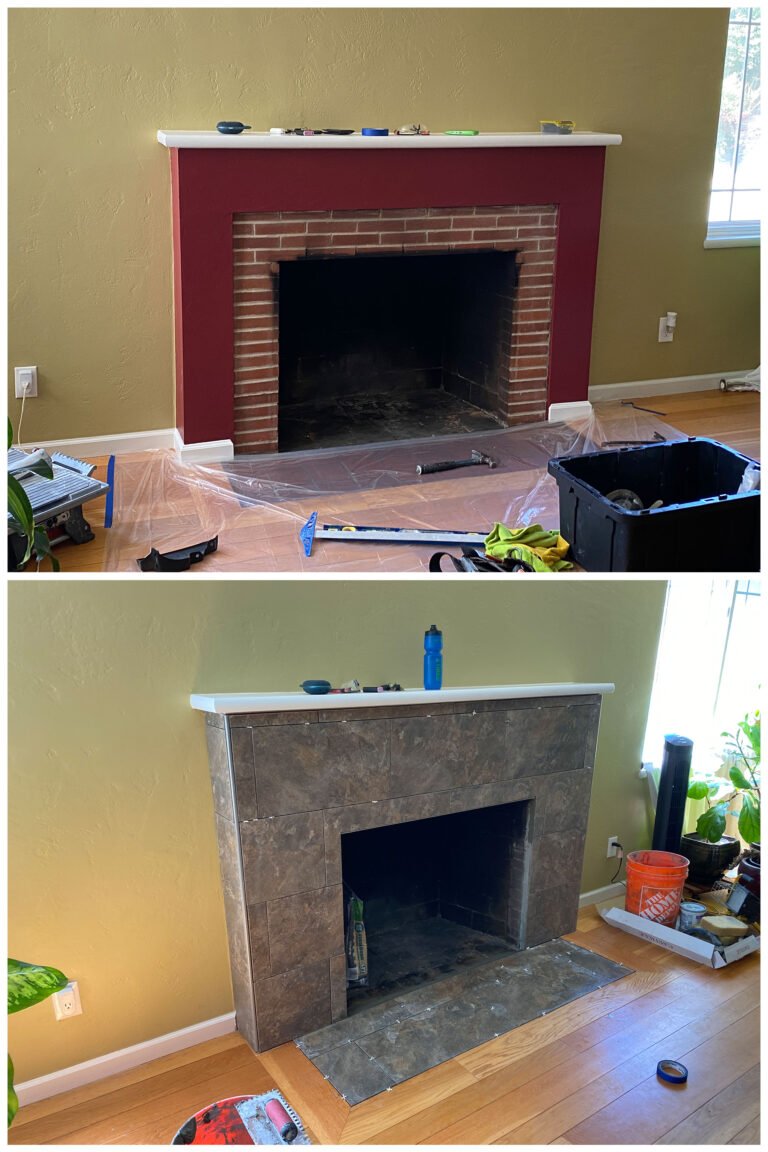
Oakland · 2024
Fireplace Surround & Hearth Reclad in Oakland
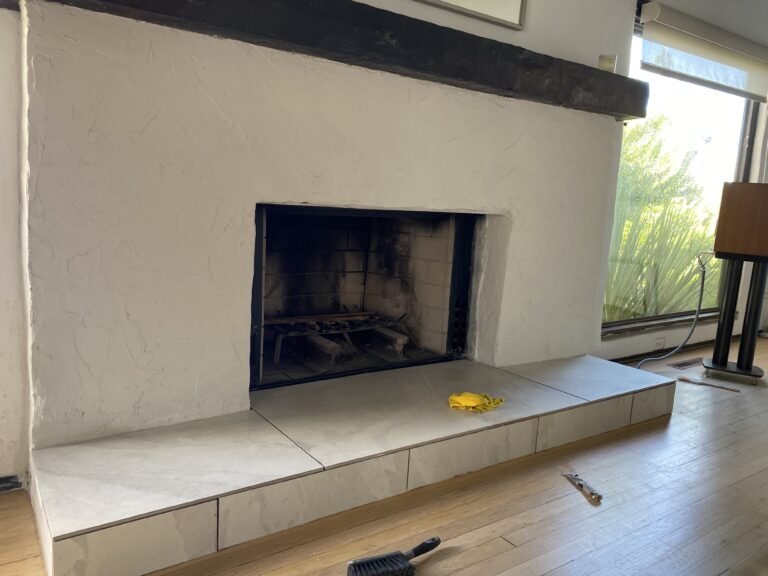
Twin Peaks · 2022
Fireplace Resurface to Lighten a Room, Twin Peaks SF