
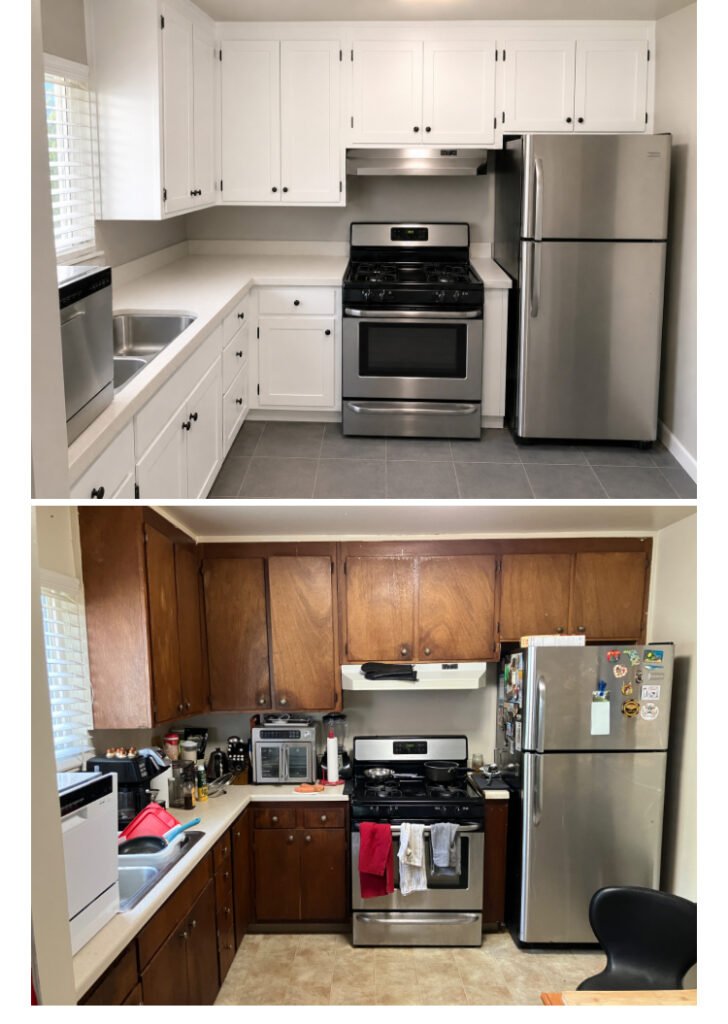
The cabinets in this Berkeley kitchen were stained and varnished wood, and the goal was a smooth, painted finish with no wood grain showing through. As we covered in our article on the two ways to resurface kitchen cabinets, either method starts with the same thing: sanding and preparation. Whether you use an epoxy cabinet kit or wood filler with a really good alkyd primer, the finish is only as good as the work underneath it.
Here we went with wood filler and primer. The first step was sanding off a lot of the old varnish. Paint won’t bond to a slick, sealed surface, and anything left behind will show up later as peeling or chipping. From there, we used wood filler to fill the open grain, then sanded it back smooth. Wood grain has different densities, and you can’t sand it smooth enough to paint over on its own. Filling it is what makes the difference between cabinets that look painted and cabinets that look like wood with paint on them.
Even after all that prep, it took several coats of KILZ stain-blocking primer-sealer to get the surface where we wanted it. Stained wood fights back: tannins and old stain want to bleed through, and each coat of sealer locks more of that in and gives the topcoat a uniform base. It’s slow, but skipping coats is how you end up with a yellow haze or visible grain a few months later.
The payoff is cabinets that look new, for a fraction of the cost of replacing the boxes. Combined with the new tile, the kitchen got a complete update while keeping the cabinets it already had.
“`
Related jobs
More jobs like this
Berkeley · 2025
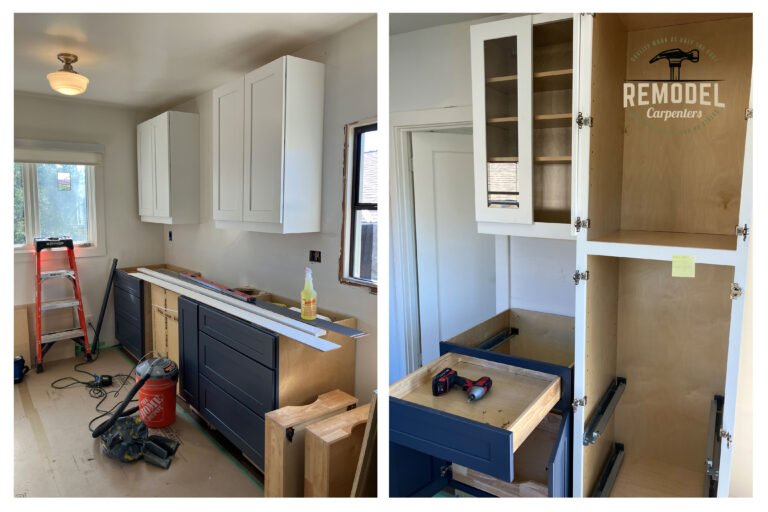
Kitchen Cabinet Installation in Berkeley
Berkeley · 2025
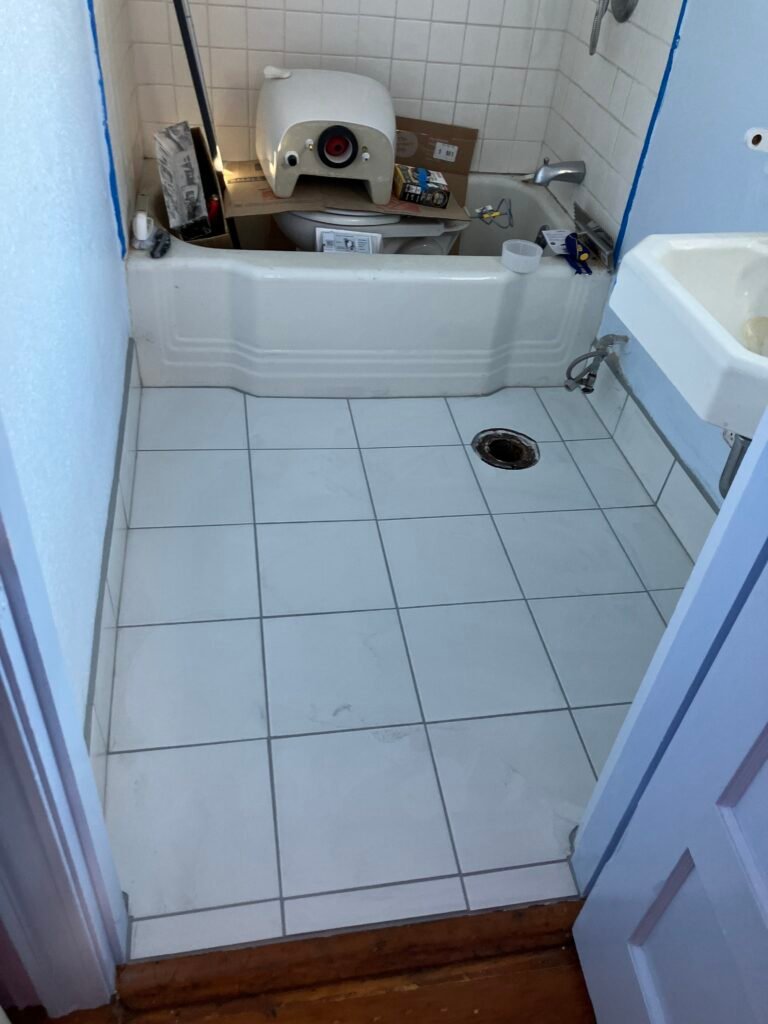
Bathroom Tile Floor & Baseboard in Berkeley
Inner Sunset · 2018
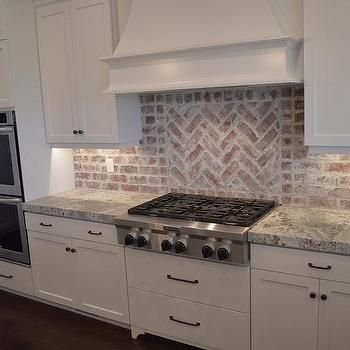
Soapstone Counters & Brick Backsplash, Inner Sunset SF