
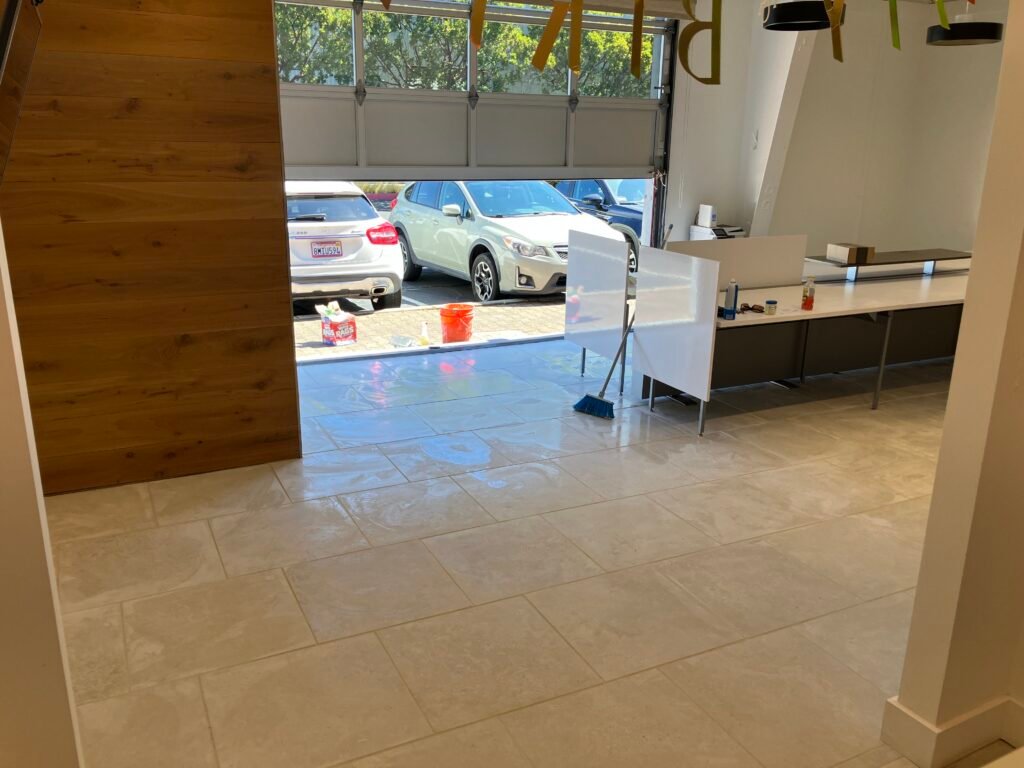
This tile floor was for a commercial space in Sausalito, managed by the harbor master on Liberty Ship Way, home to a boat launch and a small beach. The space is a mixed-use office and light industrial unit leased to a commercial tenant, and the owner, represented by the harbor master, decided it was time for an upgrade.
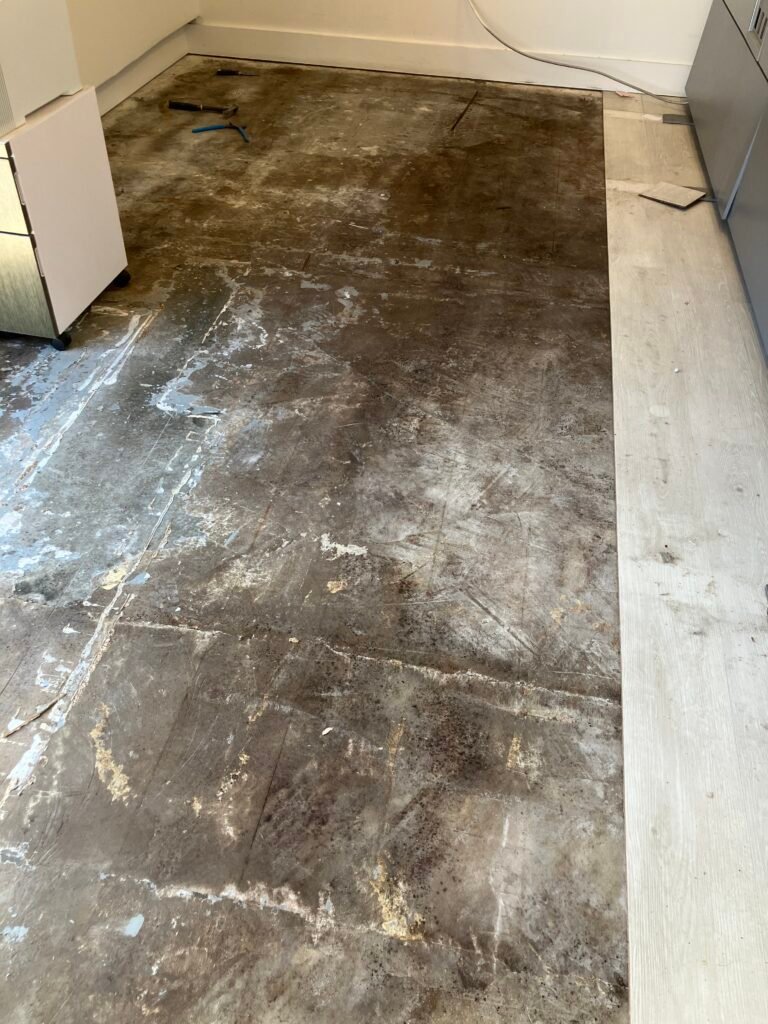
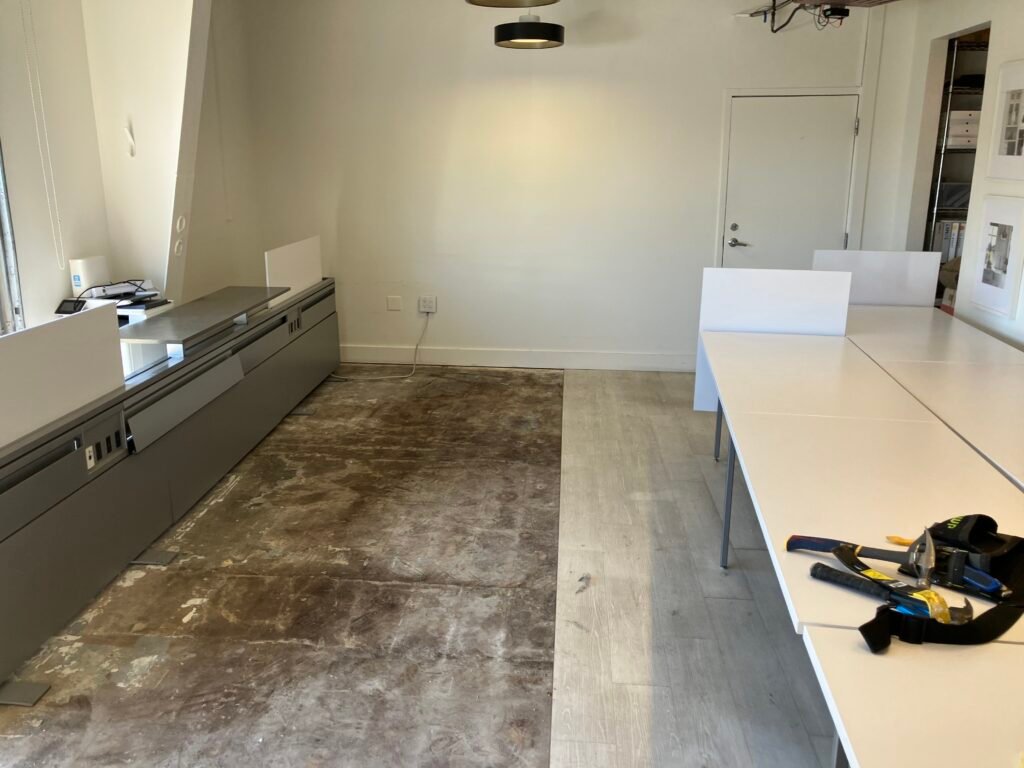
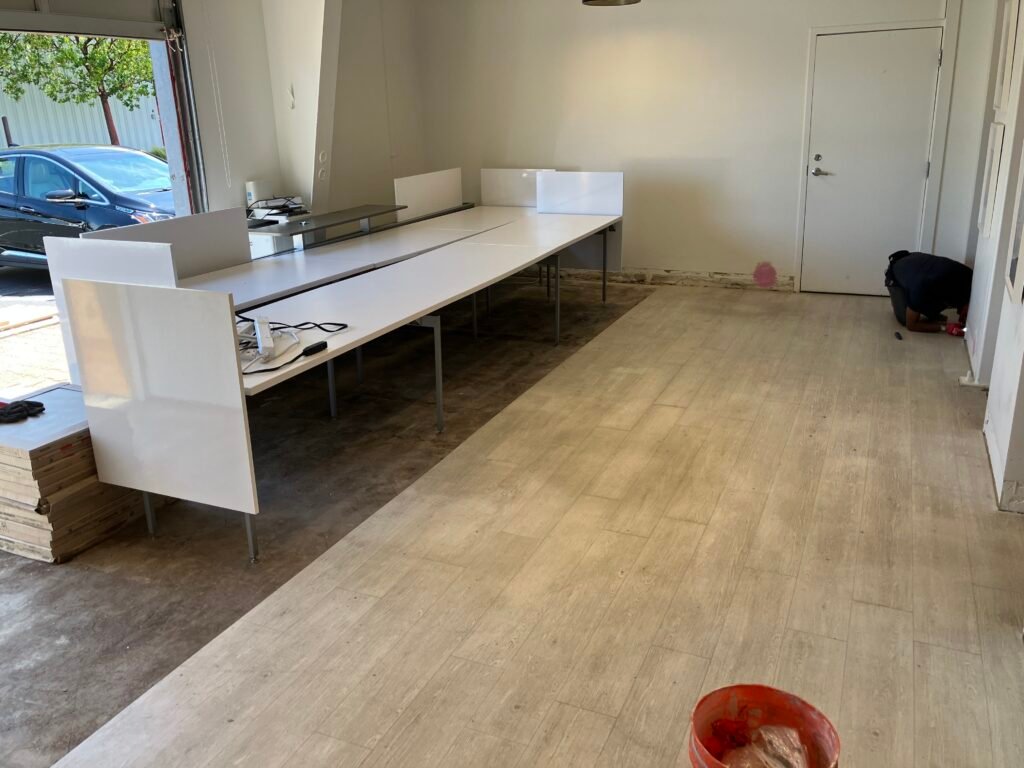
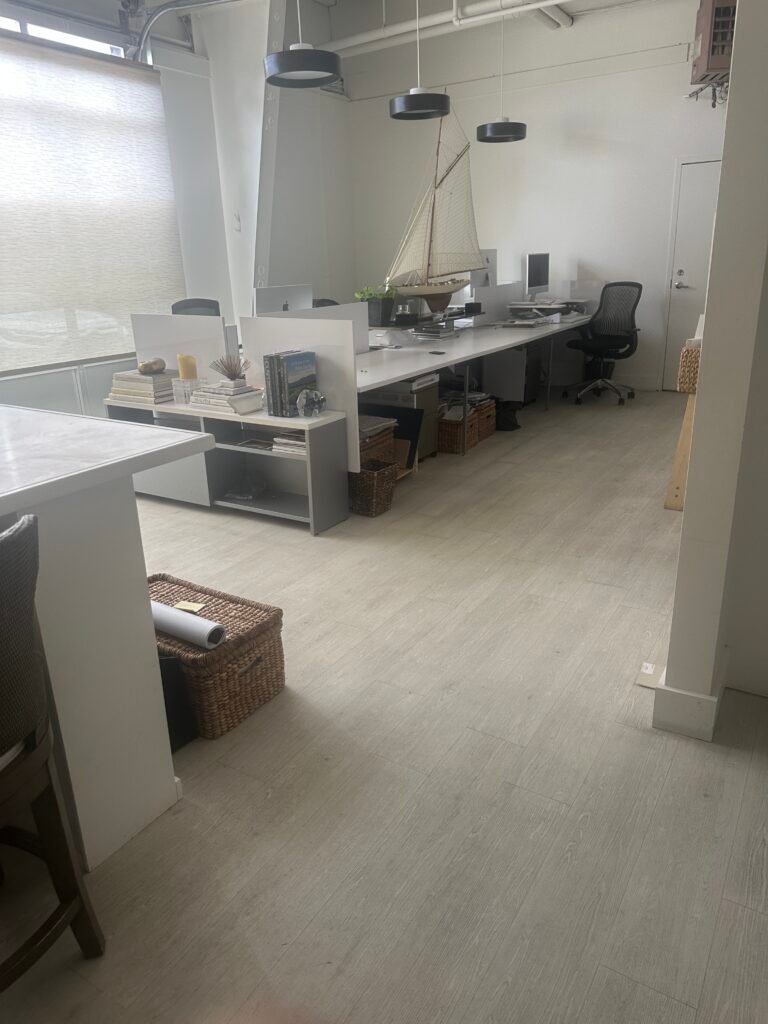
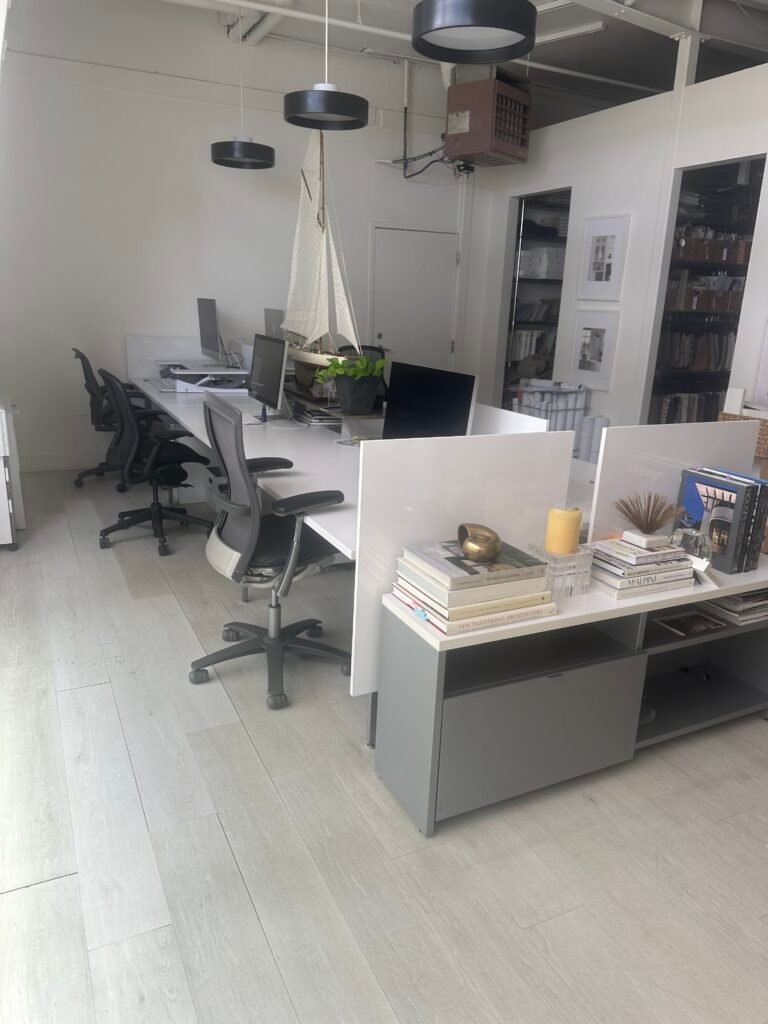
The old floor was vinyl, and water had been getting underneath it. When we pulled it up, there was mold and mildew on the slab below. The water was coming in at the garage door: rain hit the face of the door, ran down it, and seeped under the door and beneath the vinyl, where it had no way to dry out.
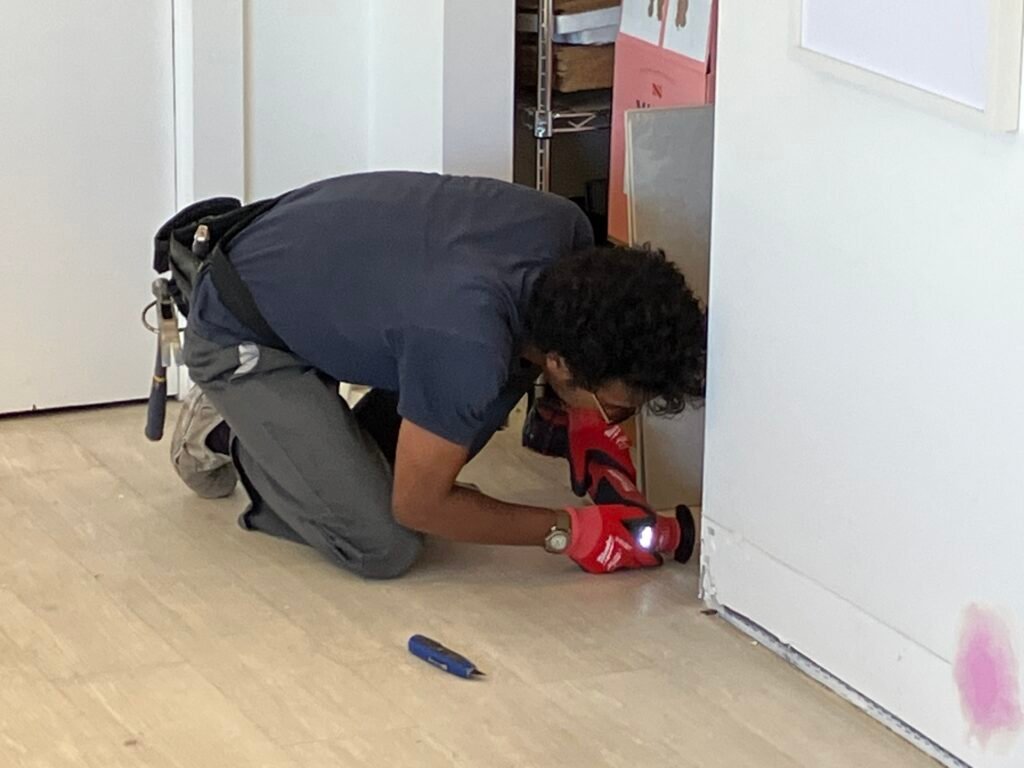
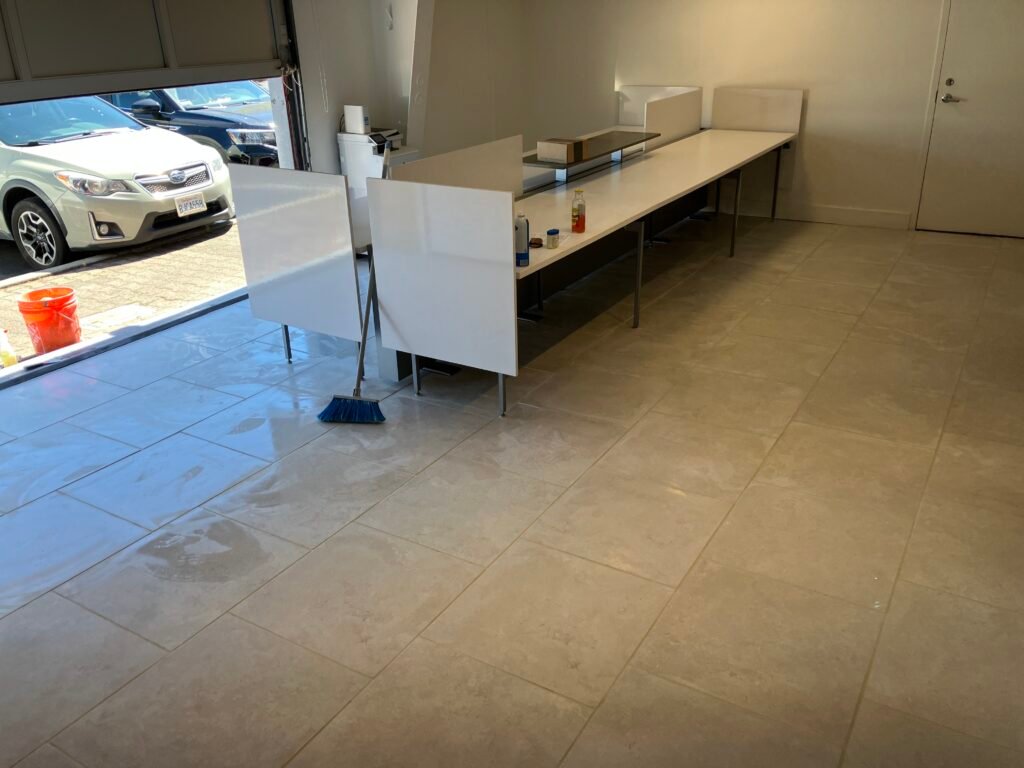
The trickiest part of the job wasn’t the floor. It was the furniture. The office had powered workstations running on their own high-voltage line, so they couldn’t simply be pushed into the hall. We worked in sections, moving the furniture from one area to the next and tiling around the space a portion at a time, so the tenant’s setup stayed intact.
After demolition, we treated the slab with a fungicide to kill the mold and mildew, then let it dry for a couple of days. Tiling over a damp or contaminated slab would only trap the problem under the new floor.
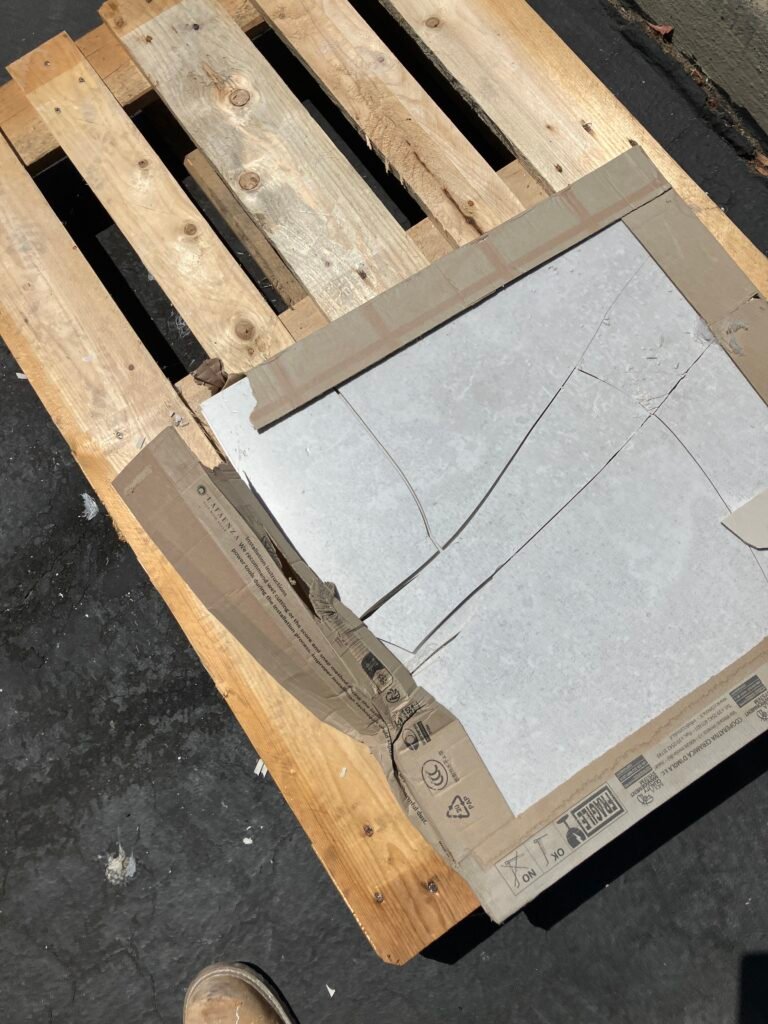
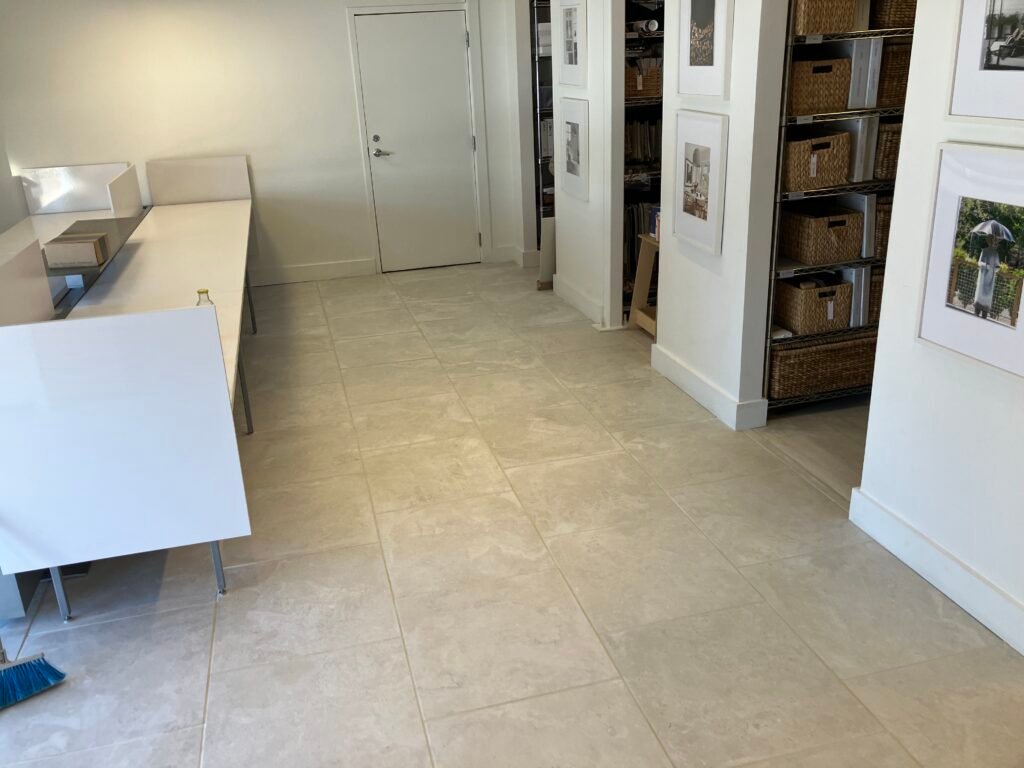
Then the install. We set large-format square tiles directly on the concrete slab with a standard polymer-modified mortar, in a one-third offset pattern. With large tiles, a one-third offset is the better choice than a half offset: most large tiles have a slight bow from manufacturing, and offsetting by a third keeps the high and low points from lining up, which keeps the floor flatter and the edges flush. A concrete slab is about the best base tile can have. It’s solid and stable, and it doesn’t flex.
We also dealt with the water at its source. At the garage door, we added sloped mortar to direct water away and keep it from seeping in, and the owner put a canopy over the door so rain no longer hits its face directly.
Even if some water still gets past the door, the frame, or the sill, the new floor can handle it. Tile, mortar, and grout are breathable materials, so moisture that gets in can dry back out instead of being trapped. That’s the benefit of man-made stone and other breathable materials over something like vinyl. If your materials don’t breathe, you may seal water out, but you’ll also seal it in, and that’s exactly how the mold under the old floor got started.
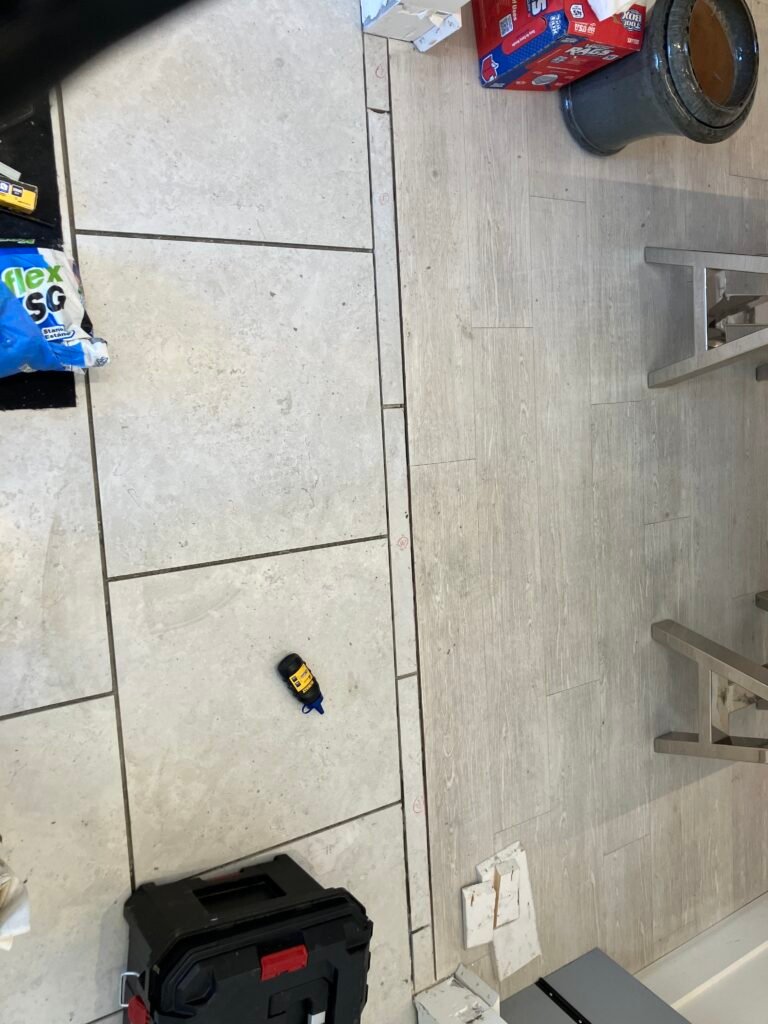
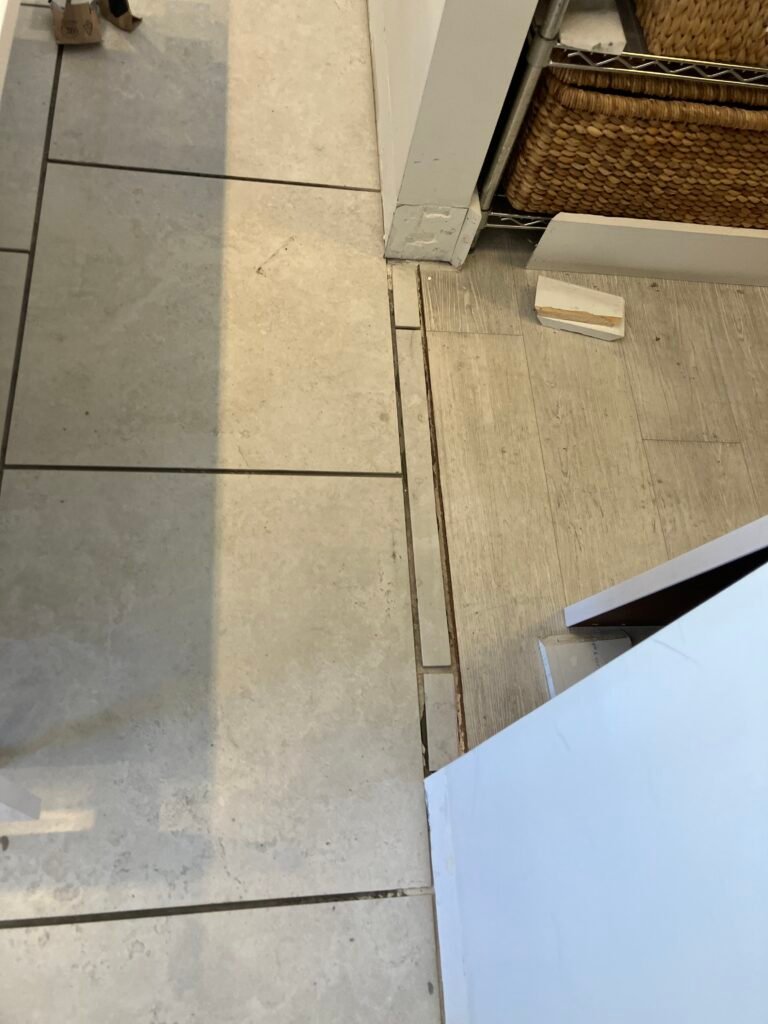
Where the new tile met areas that were staying vinyl, we designed an original tile threshold to make the transition, and used grout caulk along the threshold so the joint can flex between the two materials.
The project covered about 300 square feet and took a week. The results were dramatic: a space with a damaged, moldy vinyl floor became a clean, durable, professional-looking tile floor that will stand up to a waterfront environment far better than vinyl ever could.
“`
Related jobs
More jobs like this
Oakland Hills · 2026
Hexagonal Mosaic Bathroom Floor in the Oakland Hills
Emeryville · 2026
Tile Floor & Shower Surround in Emeryville
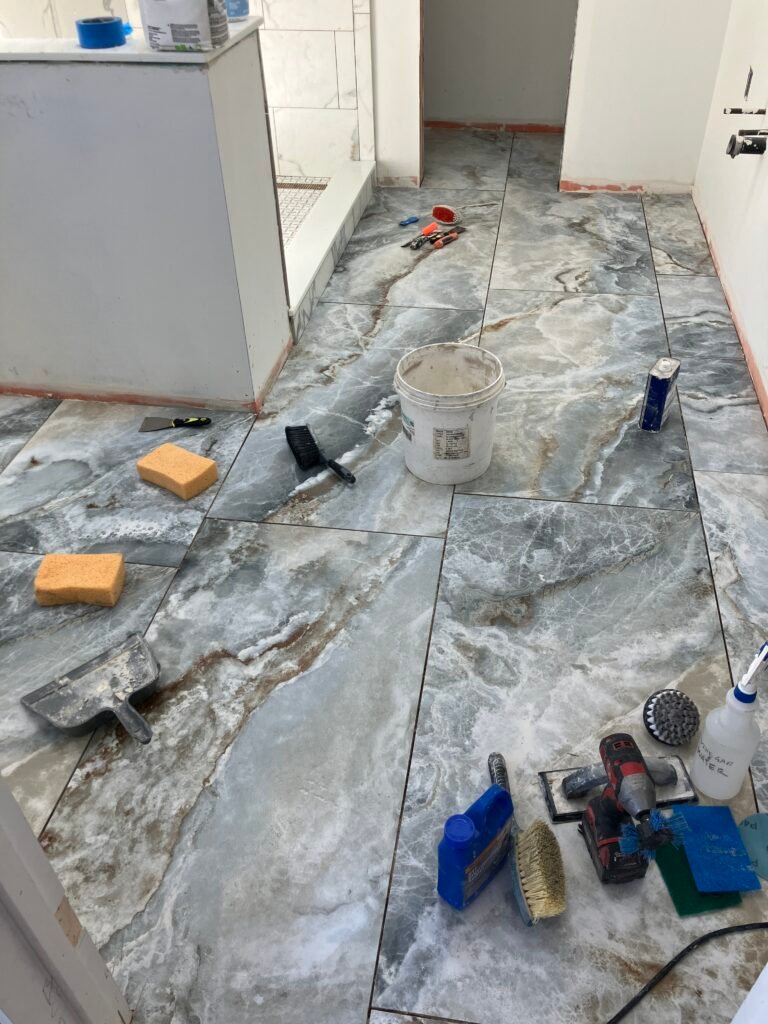
Alameda · 2026
DITRA-HEAT Large-Format Tile Floor in Alameda