
This tile floor in Rossmoor, Walnut Creek, was a straightforward job, and a good example of how a tile floor should be built from the subfloor up.
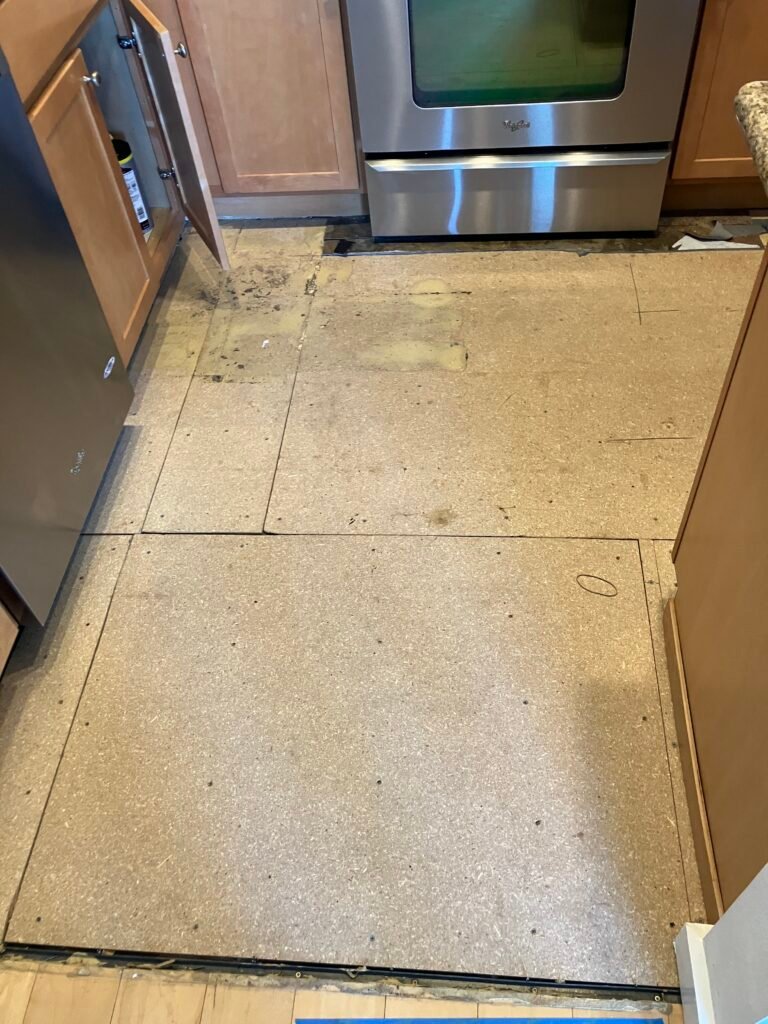
It started with demolition. Under the old floor were two layers of linoleum and a layer of particle board. Particle board is a poor base for tile: it swells and weakens when it gets wet, and it doesn’t give tile the rigid, stable support it needs. So everything came up, down to the subfloor.
Next came the backer. Cement backer board goes down over the subfloor, set in a bed of thinset mortar and fastened with backer screws on a regular pattern. The mortar bed underneath fills any small voids so the board is fully supported and won’t flex or rattle. The seams between sheets are taped with alkali-resistant fiberglass mesh and covered with thinset, which ties the sheets together into one continuous surface. Backer gives tile what it needs most: a flat, rigid, stable base that won’t move when you walk on it.
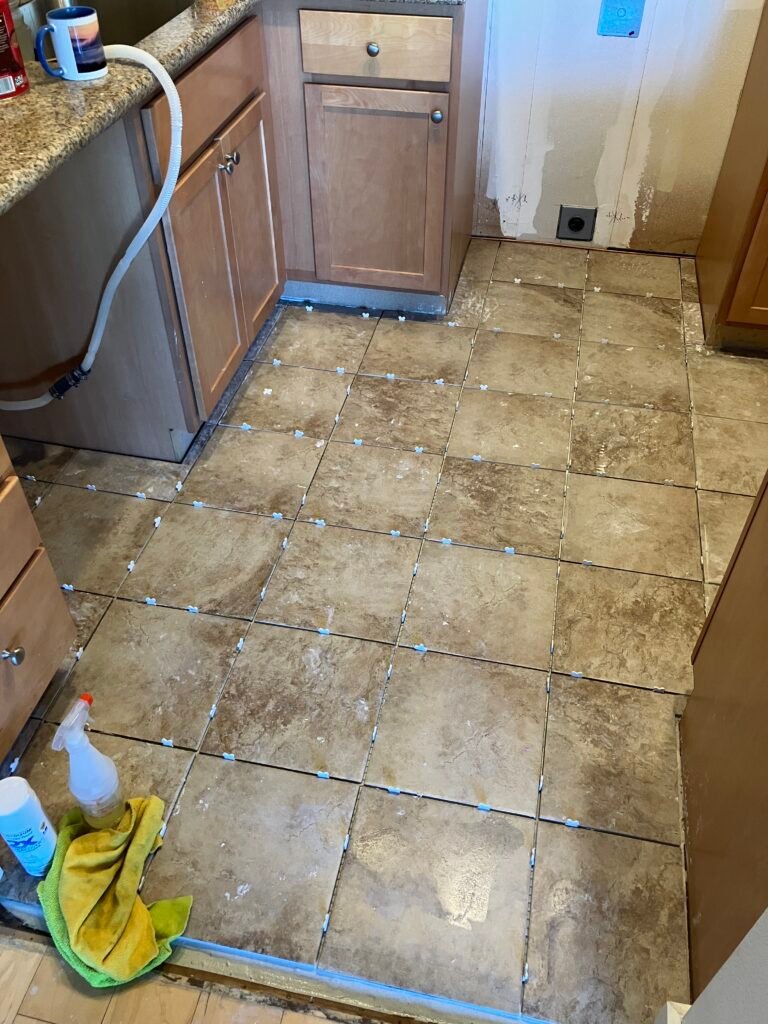
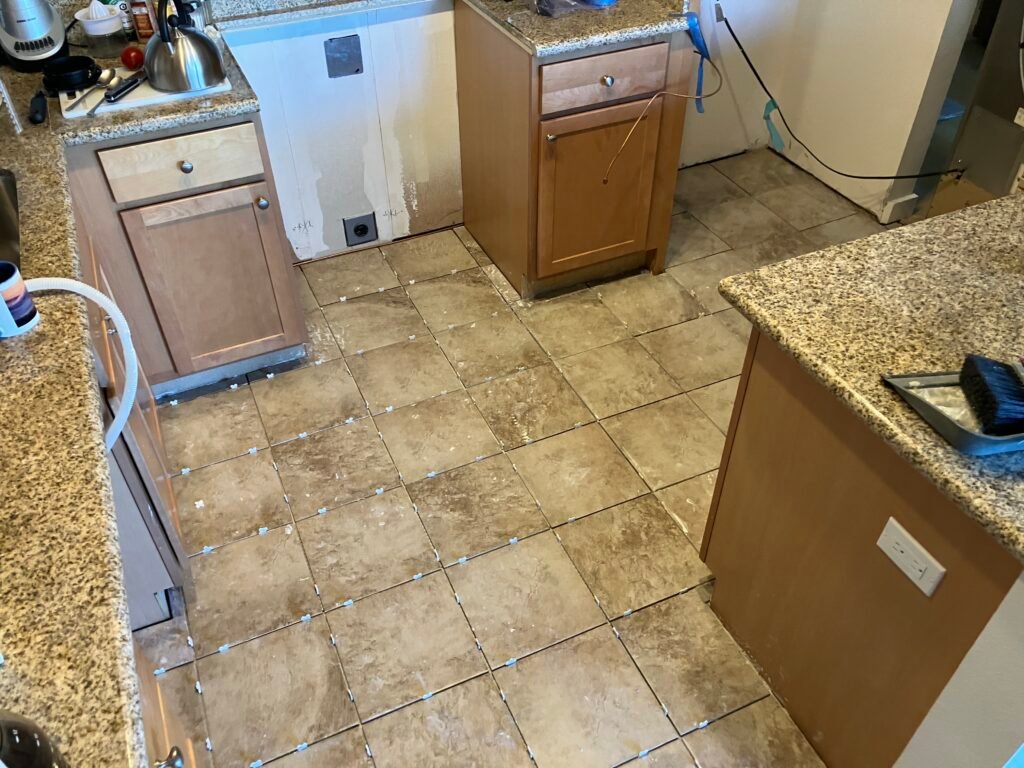
Then the tile. The client wanted a classic look that suited the home, so we went with square tiles in a simple grid. Before setting, the layout is planned from the center of the room so the cut pieces at the walls come out even, rather than leaving a sliver along one side. The tile is set in polymer-modified thinset, spread with a notched trowel, and each tile is pressed in to get full contact with the mortar. Every tile back is cleaned before it’s set, and each one is checked against its neighbors as the floor goes down, so the joints stay straight and the edges stay flush. A grid pattern is unforgiving: every line runs the length of the room, so any drift shows.
Once the mortar cured, the floor was grouted, cleaned, and finished.
None of this is exotic. It’s just the conventional way to build a tile floor, done carefully and in order. That’s what makes a floor last for decades instead of cracking in a few years.
Related jobs
More jobs like this
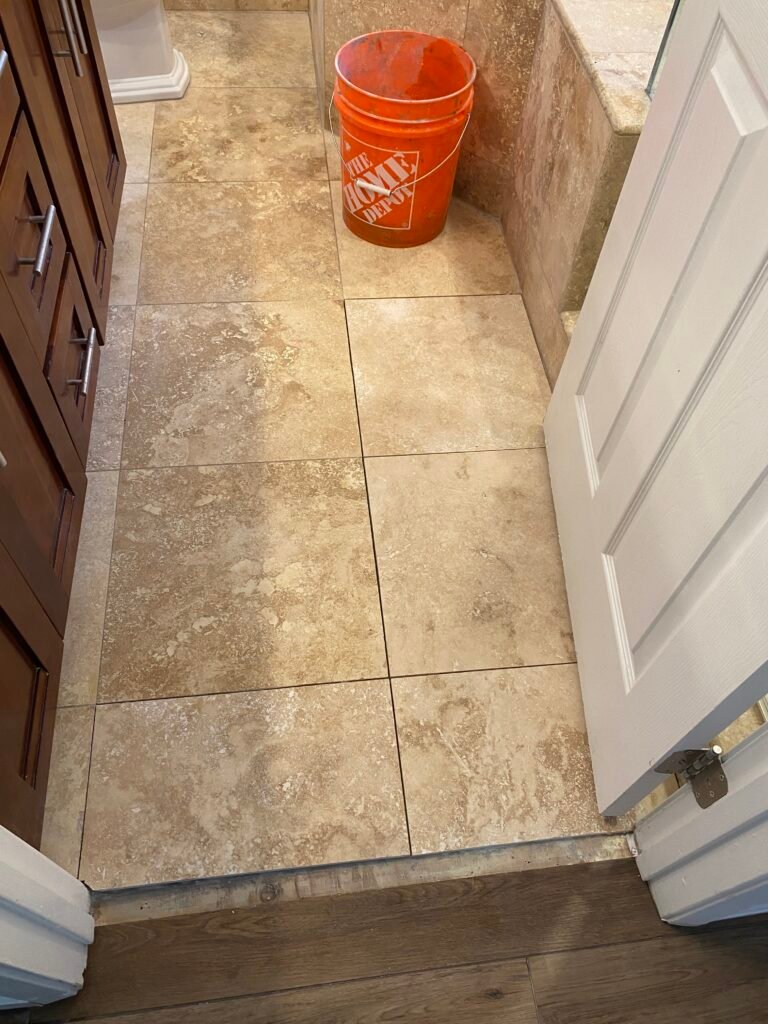
Walnut Creek · 2024
Squeaky Floor & Cracked Travertine Repair, Walnut Creek
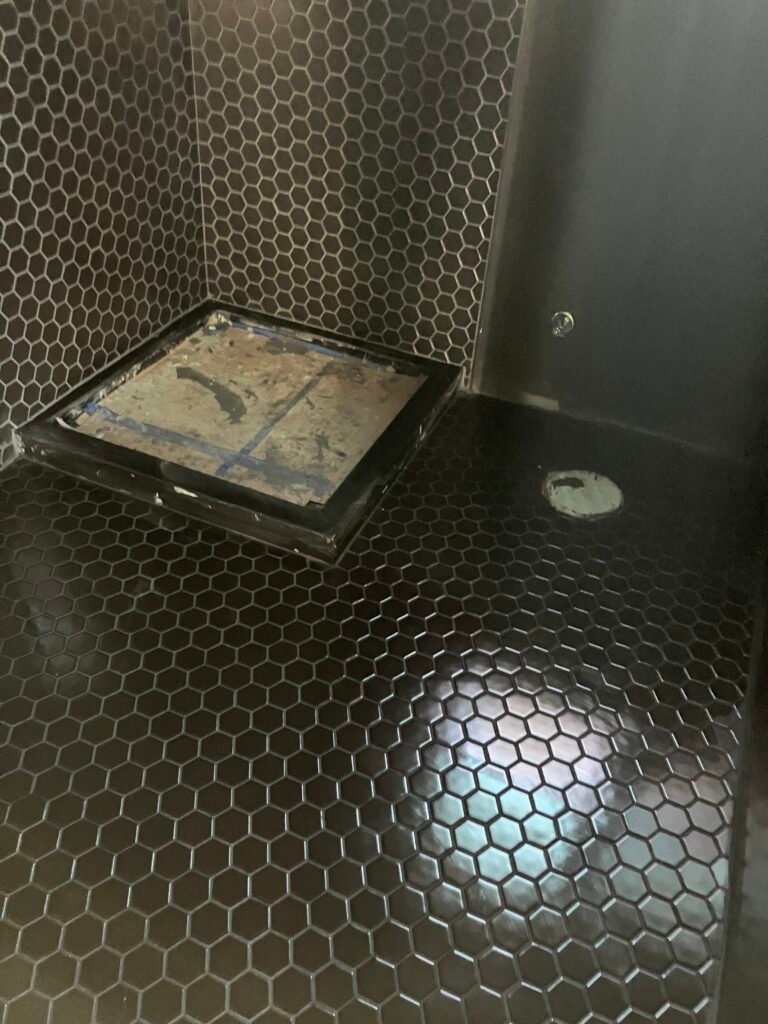
Oakland Hills · 2026
Hexagonal Mosaic Bathroom Floor in the Oakland Hills
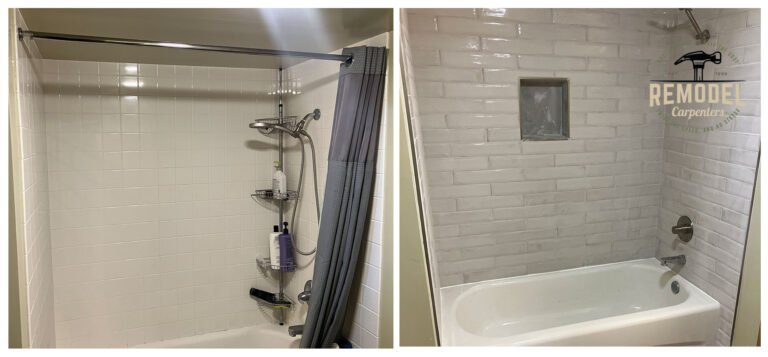
Emeryville · 2026
Tile Floor & Shower Surround in Emeryville